



Verification of Steel Cross-Sections
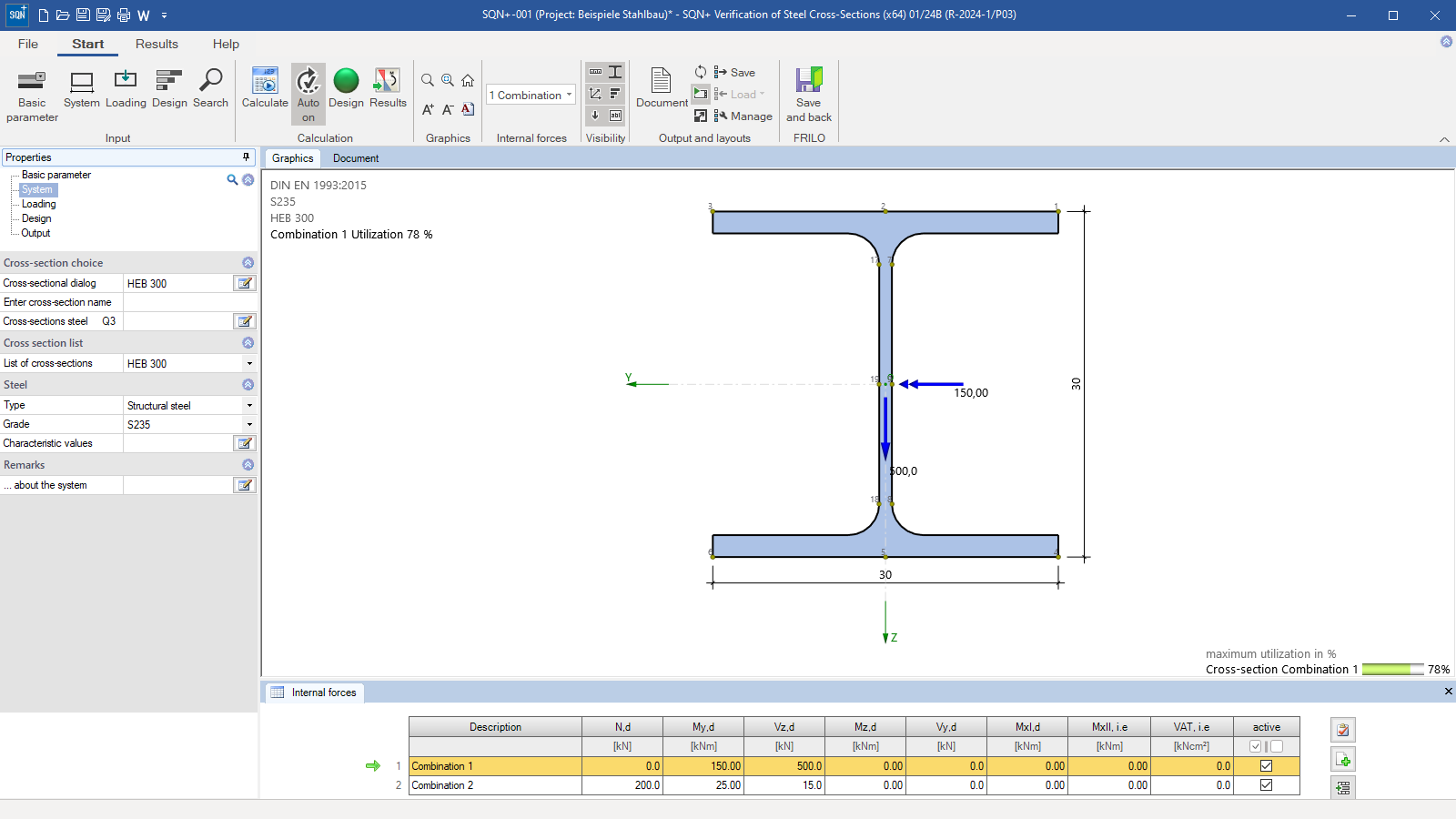
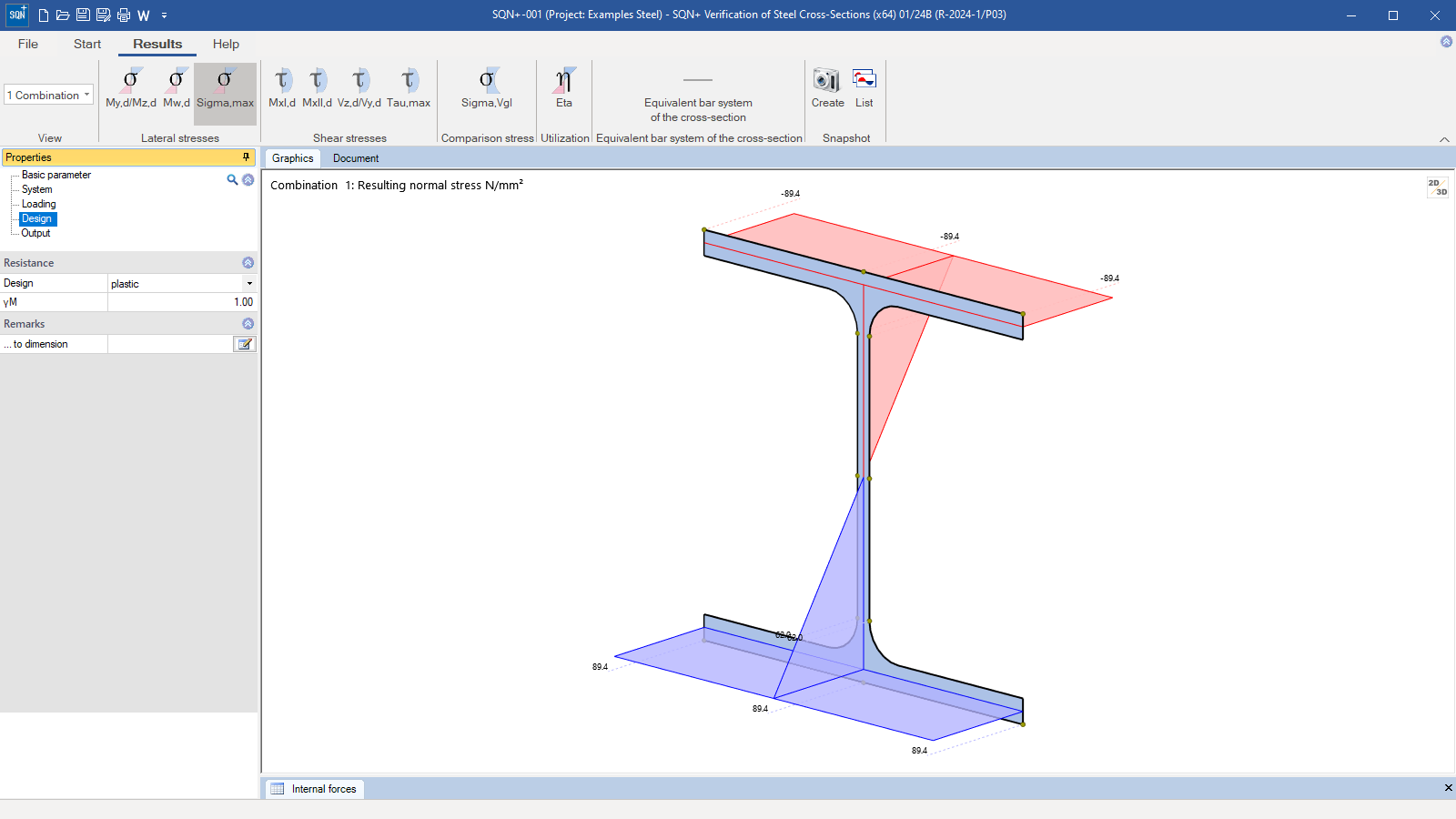
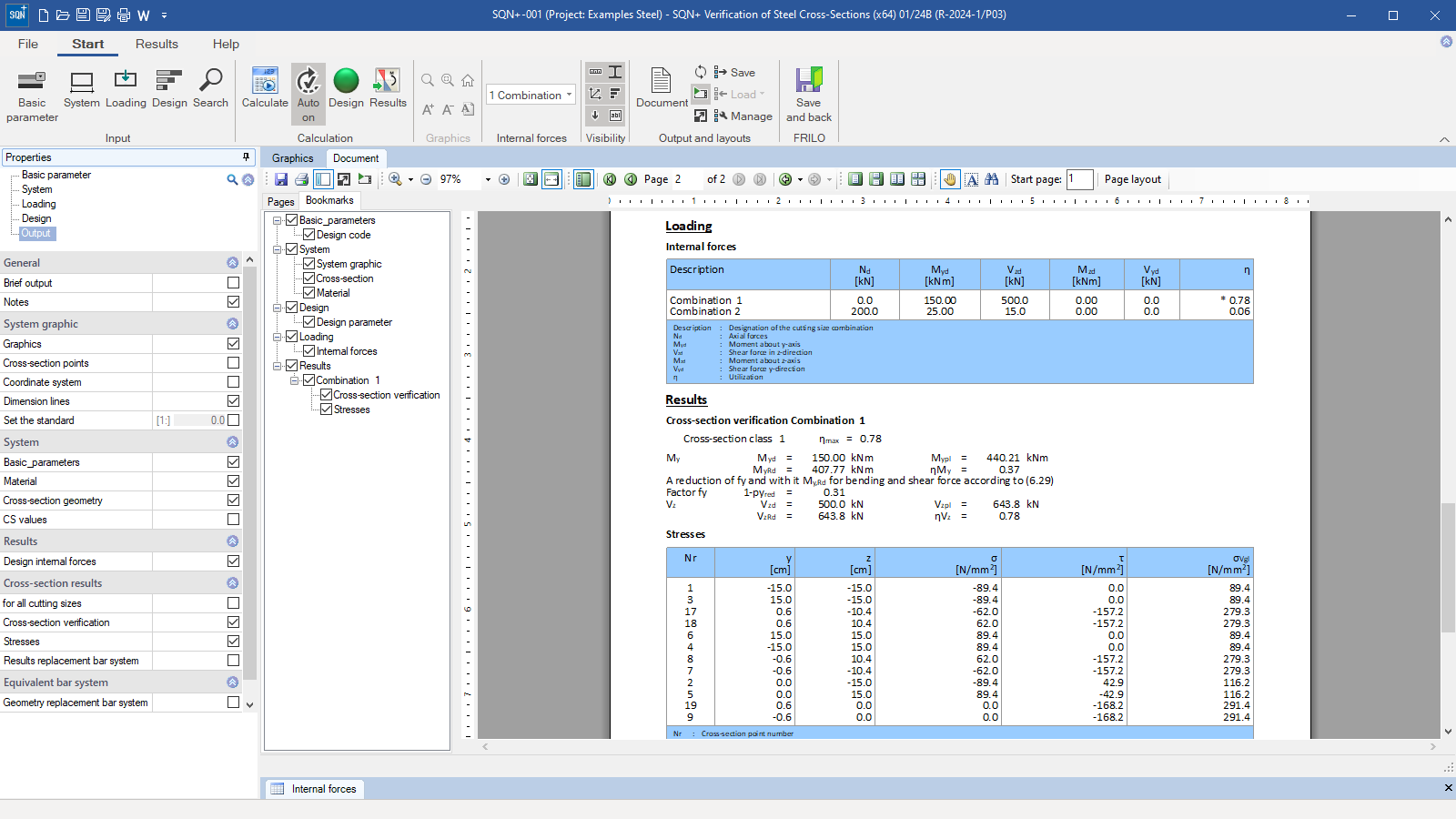
The “Verification of Steel Cross-Sections” program performs verifications of steel cross-sections in the ultimate limit state. The verifications are based on Eurocode 3.

Only available in FRILO Ultimate
Core capabilities
Material
- Structural steel S235, S275, S355, S450
- Annealed steel (S275N to S460N)
- Thermo-steel (S275M to S460M)
- Weathering steel (S235W to S355W)
- High-temperature steel (S460Q to S460QL1)
- Hollow section, hot-finished (S235H to S355H)
- Hollow section, hot-finished, fine-grain (S275NH to S460NH)
- User-defined steel
- Aluminium (extruded, drawn, sheeting, forged products and user-defined type)
Structural system
Cross-sections:
- I-sections
- U-sections
- T-sections
- Angle-sections
- C-sections
- square hollow sections
- rectangular hollow sections
- circular hollow sections
- round steel
- flat steel
- user-defined shapes
Loads
- Design internal forces from normal force, moment (My, Mz), primary and secondary torsional moment (MxI, MxII), warping moment (Mw) and shear force (Vy, Vz).
- Multiple combinations of design internal forces can be entered
Verifications
The cross-section is verified in the ultimate limit state as per DIN EN 1993-1-1, 6.2. According to DIN EN 1993-1-1, 5.5, the steel cross-section is classified in one of the cross-section classes 1 to 4 depending on the applying effects of actions and the c/t ratio of its cross-section parts under compression. The verification of the cross-section is determined by the classification. For the cross-section classes 1 to 3, the verification can optionally be based on Equation 6.1 (stress resistance verification) and Equation 6.2 (utilisation of plastic load-bearing capacities in accordance with the cross-section class). The verification for cross-section class 4 is performed using the effective cross-sectional properties.
Output profile
- Brief output
- User-defined output scope
File formats
- Word
- Printer
Import options
- ASCII
Export options
- ASCII
- Word
Steel construction
- DIN EN 1993
- ÖNORM EN 1993
- BS EN 1993
- PN EN 1993
- DIN EN 1999
Support resources

News

Corporate headquarters as reinforced concrete skeleton structure
With the construction of a new corporate headquarters, Heidelberg Materials has demonstrated the remarkable range of reinforced concrete as an attractive building material. FRILO and Allplan were used by the structural engineers.
FRILO launches version 2024-2 with powerful updates for structural analysis and design
Highlights include the optimised design of Schöck Isokörbe®, the advanced integration of DC foundation engineering programs into the FRILO environment and new RSX interfaces for detail verifications in steel construction.
Events

